
Quick Answer: AC unit security cages stop 85% of theft attempts by creating physical barriers that force thieves toward easier targets, while layering cages with alarms, cameras, and lighting provides maximum copper theft prevention.
Your outdoor AC unit is a cash target for thieves. “Scrap value of copper is about $3.25 a pound so if you fill up a nice 55-gallon drum of copper, you got yourself probably about a thousand bucks,” according to HVAC industry experts. Meanwhile, your replacement costs run $3,000-$10,000.
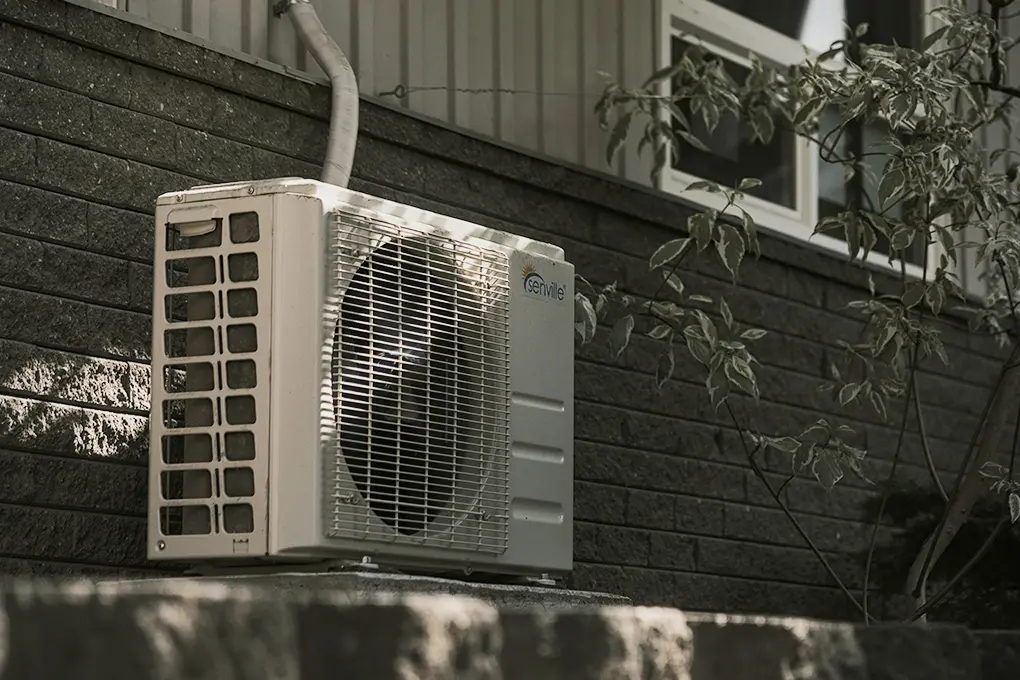
Thieves can steal AC units in just 20 seconds, leaving you without cooling during summer heatwaves. The units sit outdoors unprotected, often in dark or secluded areas where criminals work undetected.
Copper is the most commonly stolen metal according to the National Criminal Justice Reference Service. Although copper from an HVAC unit rarely sells for more than $100, the damage caused by removal costs thousands in replacement expenses.
Table of Contents
- Key Takeaways
- AC Theft Statistics and Regional Trends
- What Thieves Target in Your HVAC System
- Prevention Method #1: HVAC Security Cages
- Prevention Method #2: Vibration Sensors and Motion Alarms
- Prevention Method #3: Outdoor Security Cameras
- Prevention Method #4: Defensive Landscaping Barriers
- Prevention Method #5: Motion-Activated Lighting
- Prevention Method #6: Property Marking and Registration
- Cost-Benefit Analysis: Prevention Methods Compared
- Creating Layered AC Unit Defense
- Insurance Coverage for HVAC Theft
- What to Do If Your Air Conditioner Is Stolen
- Protecting AC Units in Apartments and Rentals
- Protecting Your AC Investment
- Frequently Asked Questions
- Sources
Key Takeaways
- HVAC theft made up 25% of all property theft claims over a two-and-a-half-year period, averaging more than $6,500 per claim.
- Security cages anchored to concrete deter most theft attempts by adding 15-30 minutes of noisy work that exposes thieves to detection.
- Layered protection combining cages, alarms, cameras, and lighting stops 95%+ of theft attempts by creating multiple failure points.
- Browse Batten’s outdoor security cameras and complete home security collection to protect your HVAC investment.
AC Theft Statistics and Regional Trends
To give you a better idea of the problem you’re facing, here’s some more valuable information.
National Theft Patterns
Among EMC Insurance customers, HVAC unit theft claims made up 25% of all theft claims during a two and a half year period, and each claim averaged more than $6,500. These crimes target both residential and commercial properties, with outdoor units providing easy access for thieves.
Warm-weather states experience the highest theft rates. Florida, Texas, California, Arizona, and Georgia see concentrated AC theft due to extended cooling seasons and year-round outdoor unit operation. Commercial properties – churches, schools, vacant buildings – face particular risk with multiple exposed units.
What Makes Units Easy Targets
AC condensers sit outdoors in accessible locations. Thieves can steal units in just seconds, disconnecting and loading them before anyone notices. Most thefts occur between 10 PM and 6 AM when darkness provides cover and residents sleep.
What Thieves Target in Your HVAC System
Thieves get pretty creative, and exactly what they steal depends on how much time they have on their hands.
Copper Coils vs. Complete Unit Theft
Criminals use two approaches depending on time and transportation:
Copper Stripping (3-5 minutes): Thieves cut refrigerant lines and extract copper coils on-site, leaving units bolted down but destroyed. This requires bolt cutters and basic tools.
Complete Unit Theft (1-3 minutes): Organized criminals disconnect entire units and load them into pickup trucks. Units get sold online as “used replacements” or stripped at off-site locations.
Components Thieves Extract
Primary Targets:
- Copper refrigerant lines (easiest to cut and remove)
- Condenser coils (2-3 pounds of copper per residential unit)
- Compressor wiring (additional copper inside housings)
- Electrical disconnect box (copper wiring and breakers)
“Although the copper from an HVAC unit rarely sells for more than $100, the damage caused by its removal can cost business owners thousands in replacement costs,” according to EMC Insurance loss control experts.

Prevention Method #1: HVAC Security Cages
HVAC security cages are one of the most effective ways to prevent air conditioner theft by adding visible deterrence, time, and noise that most thieves will not risk.
Types of Air Conditioner Security Cages
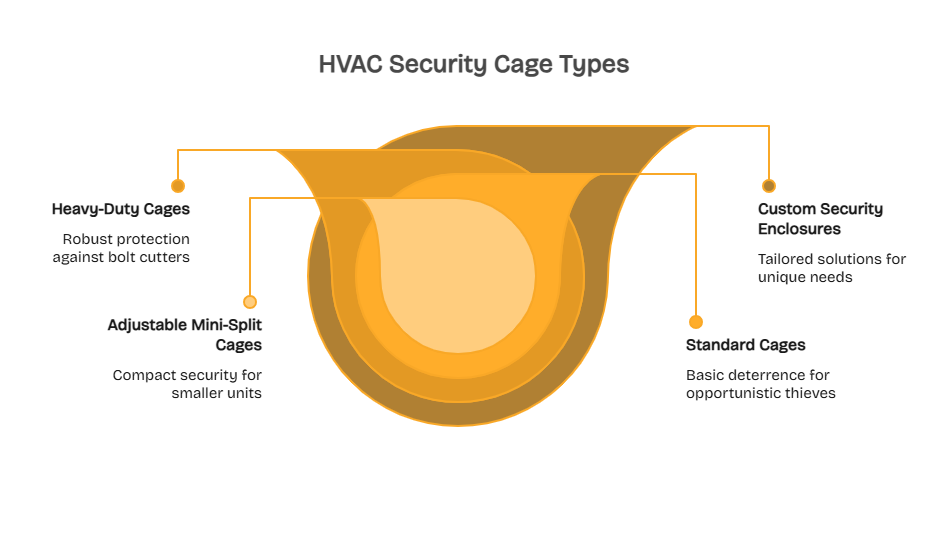
- Standard 16-Gauge Steel Cages ($200-$400): Entry-level cages surround units with welded steel panels locked at top access points. They fit condensers up to 48″x48″x59″ and mount to concrete slabs with expansion bolts. These deter 70-80% of opportunistic thieves lacking cutting tools.
- Heavy-Duty 14-Gauge Cages ($500-$900): Commercial-grade enclosures use thicker steel with reinforced corners and tamper-resistant puck locks. Multiple access panels allow technician entry. These stop 85-95% of theft attempts by resisting bolt cutters.
- Custom Security Enclosures ($1,200-$2,500): Fabricated for unusual installations or multiple-unit protection. Options include decorative metalwork, integrated lighting, and custom colors.
- Adjustable Mini-Split Cages ($150-$350): Wall-mounted models fit 10″-16″ width ranges, securing smaller outdoor components.
Installation Requirements
Mount cages with 3/8″ concrete expansion anchors at all four corners minimum. Maintain 12-24 inch clearances around units per manufacturer specifications to prevent airflow restriction and warranty voids.
For properties without concrete pads, dig 24-36 inch post holes and set 4×4 posts in concrete footings. Allow 48-72 hours curing before attaching cages.
Lock Selection
Standard padlocks fail under bolt cutter attacks. Specify puck locks (disc locks) with shrouded shackles and hardened steel cores. Master Lock 6270 models provide key-retaining features.
Cage Effectiveness
Security cages work by adding time and noise. Where unprotected units take 20 seconds to 3 minutes to steal, cages extend theft time to 15-30 minutes of loud cutting that exposes thieves to detection and witness identification.
Prevention Method #2: Vibration Sensors and Motion Alarms
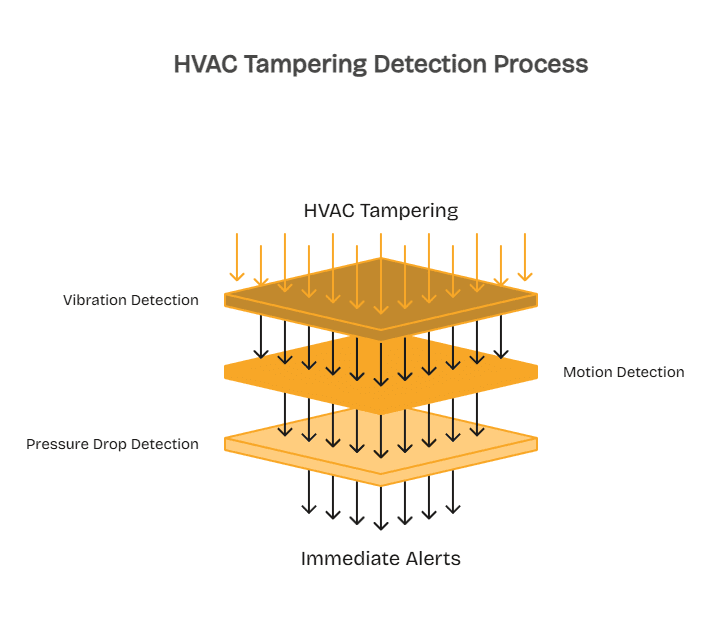
Vibration sensors and motion alarms add real-time detection to HVAC protection, turning tampering into immediate alerts instead of a silent, successful theft.
HVAC Alarm Systems
Alarm systems add active monitoring to physical cages. When thieves tamper with protected units, sensors trigger sirens, notifications, and professional responses.
- Vibration Sensors ($75-$150): Mount directly on AC units detecting cutting, hitting, or lifting. Adjustable sensitivity prevents weather false alarms.
- Motion Alarms ($50-$120): Infrared sensors covering 20-40 foot zones activate when movement enters protected areas.
- Pressure Drop Detection ($150-$300): Monitor refrigerant pressure continuously. Sudden drops from line cuts trigger 30-60 second alerts.
Integration with Security Systems
Connect HVAC sensors to existing home security for centralized monitoring. The SimpliSafe Starter System integrates outdoor sensors with professional monitoring averaging 2-5 minute police dispatch.
| Feature | Standalone | Integrated |
| Monthly Cost | $0 | $17-$60 |
| Response | Siren | Professional |
| Effectiveness | 60-70% | 80-90% |
Prevention Method #3: Outdoor Security Cameras
Outdoor security cameras deter theft and provide evidence by making HVAC units highly visible, monitored targets rather than easy, anonymous opportunities.
Strategic Camera Placement
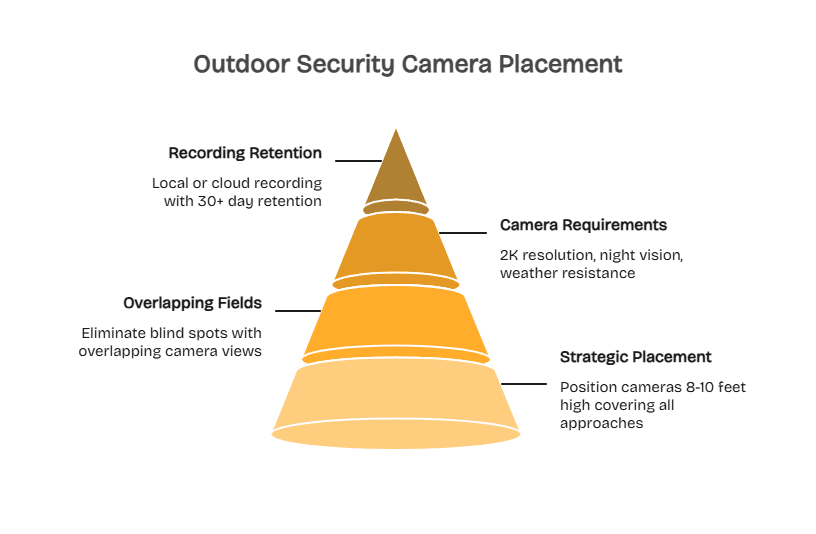
Position cameras 8-10 feet high covering AC approaches from all directions. Overlapping fields eliminate blind spots.
Camera Requirements:
- 2K minimum resolution (2560×1440)
- Color or infrared night vision
- 110-130 degree field of view
- IP65+ weather resistance
- Local or cloud recording with 30+ day retention
Best Cameras for HVAC Monitoring
- Lorex 4K Smart Deterrence: Wired 4K with built-in spotlights and sirens activating when motion detected.
- REOLINK Argus 3 Pro: Solar-powered 2K resolution eliminating wiring hassles – ideal for units far from power.
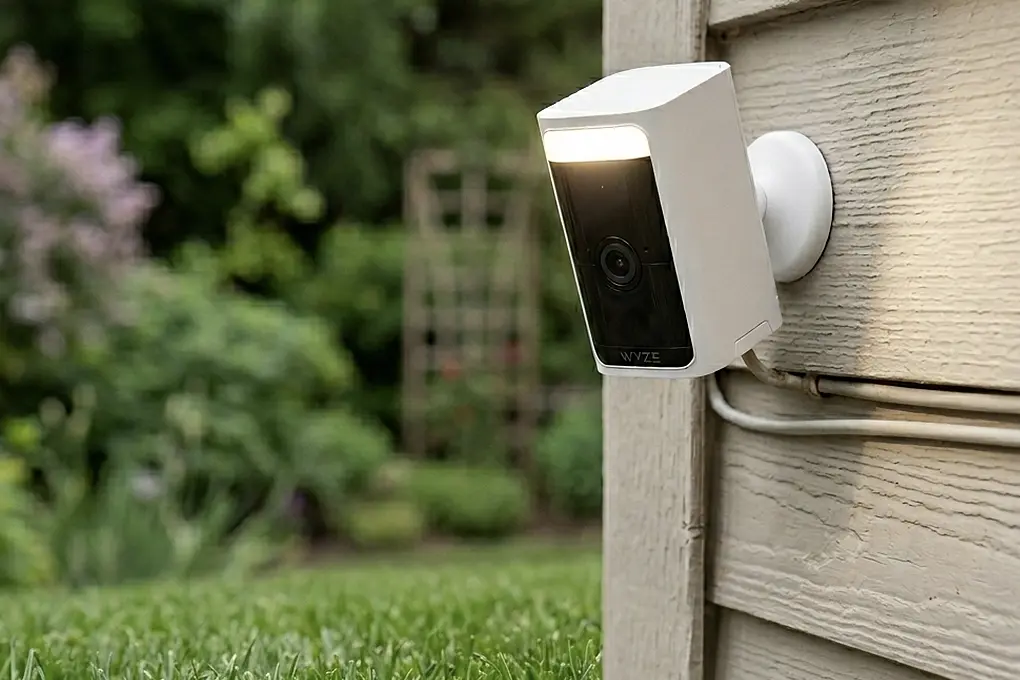
- Wyze Battery Cam Pro: Budget 2K video with AI detection and wireless installation.
- Deep Sentinel Live Guard: Human guards monitor in real-time, intervening via audio when theft detected.

Browse Batten’s outdoor security camera comparisons for detailed recommendations.
Prevention Method #4: Defensive Landscaping Barriers
Defensive landscaping uses natural barriers to make HVAC units uncomfortable and risky to access without blocking airflow or creating maintenance problems.
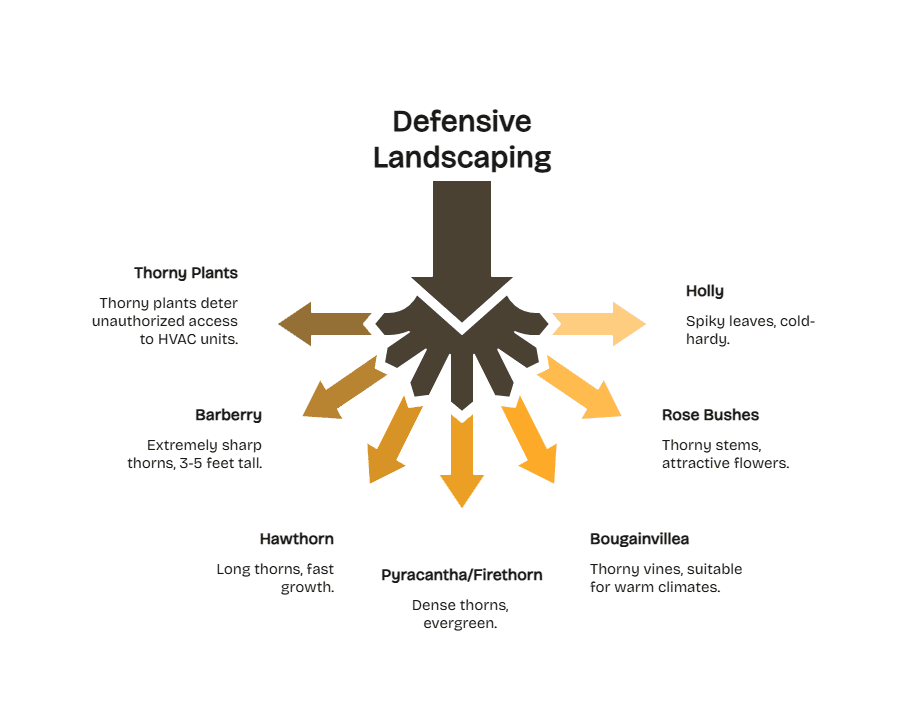
Thorny Plants as Natural Protection
Plant barriers 24-36 inches from units – close enough to deter but far enough for technician access.
Best Defensive Plants:
- Barberry (extremely sharp thorns, 3-5 feet)
- Hawthorn (long thorns, fast growth)
- Pyracantha/Firethorn (dense thorns, evergreen)
- Bougainvillea (thorny vines, warm climates)
- Rose bushes (thorny stems, attractive)
- Holly (spiky leaves, cold-hardy)
Clearance Requirements
Manufacturers specify 12-24 inch clearances for airflow. Violating specifications voids warranties and causes 10-20% efficiency loss. Keep plants below 36 inches preventing top airflow blockage.
Prevention Method #5: Motion-Activated Lighting
Motion-activated lighting removes concealment by instantly flooding HVAC areas with light, making thieves visible and far more likely to abandon the attempt.
Why Lighting Stops Theft
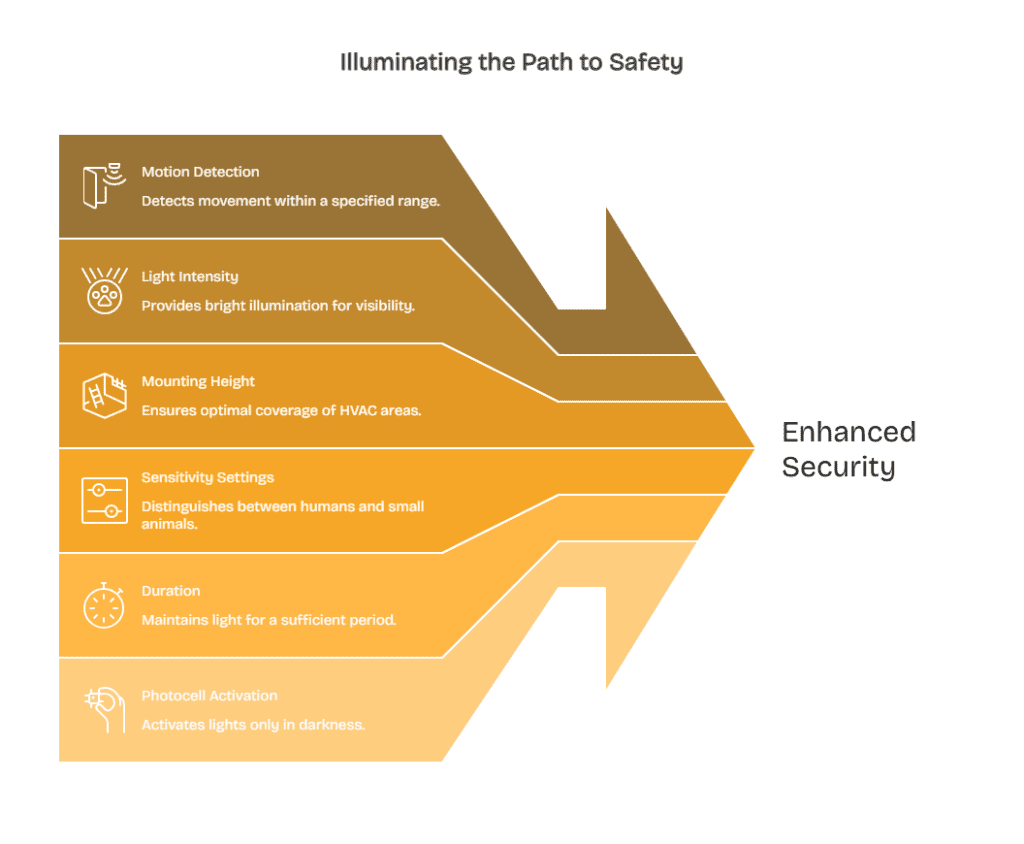
Thieves prefer darkness. 1,000-2,000 lumen floodlights illuminate 40-60 foot radius, turning nighttime into daytime visibility. Mount lights 8-12 feet high covering units and approach paths.
Optimal Settings:
- Detection range: 20-40 feet
- Sensitivity: Medium-high (humans, not small animals)
- Duration: 3-5 minutes after motion stops
- Photocell: Darkness-only activation
LED floodlights cost $30-$80 and last 25,000-50,000 hours. Smart models integrate with home automation for smartphone control.
Learn more about outdoor security lighting options in our expert comparison guide.
Prevention Method #6: Property Marking and Registration
Property marking and registration reduce resale value by making stolen HVAC units traceable, identifiable, and far riskier for thieves to move or sell.

Document Your Unit
Photograph data plates showing manufacturer, model, serial numbers before theft. Store photos in cloud storage. Register numbers with local police property programs.
Permanent Marking
Use electric engravers inscribing:
- Driver’s license number
- Property address
- Phone number
- “Reward if Found”
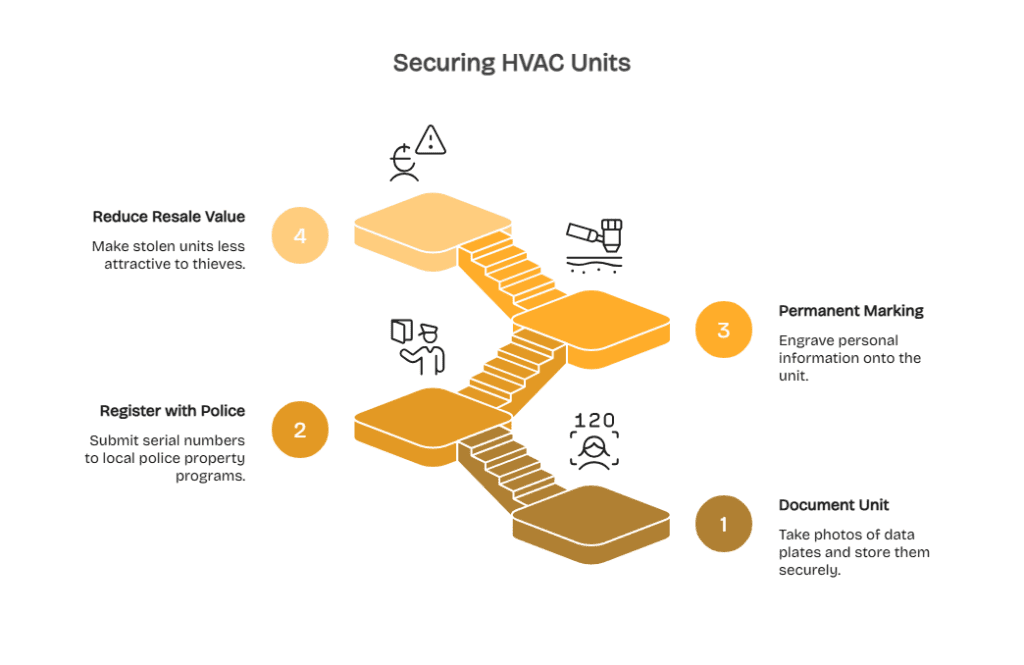
Engrave multiple locations: housing, compressor, disconnect box.
Warning Labels
Apply visible stickers: “Protected by GPS Tracking” or “Serial Registered with Police.” UV-reactive marking identifies property invisibly under blacklight.
Cost-Benefit Analysis: Prevention Methods Compared
| Method | Installation | Monthly | Prevention | ROI |
| Steel Cage | $300-$600 | $0 | 85% | Immediate |
| HVAC Alarm | $75-$200 | $0-$30 | 70% | 1-3 months |
| Camera | $80-$300 | $0-$10 | 75% | 1-4 months |
| Deep Sentinel | $299 | $60 | 95% | 6-12 months |
| Motion Lighting | $40-$120 | $0-$2 | 60% | Immediate |
| Landscaping | $100-$500 | $20 | 50% | 6-12 months |
| Property Marking | $20-$50 | $0 | 35% | If recovered |
| Complete Layered | $800-$1,500 | $30-$60 | 95%+ | 2-6 months |
Compare costs against $6,500 average theft claims plus replacement, emergency services, and permit fees.
Creating Layered AC Unit Defense
Layered AC unit defense combines deterrence, barriers, detection, and response so thieves must overcome multiple obstacles, dramatically increasing risk and reducing successful theft.

Security Layer Strategy
Professional security uses layered defenses creating multiple failure points.
- Layer 1 – Visible Deterrence: Warning signs, cameras, security presence redirect thieves toward easier targets.
- Layer 2 – Physical Barriers: Cages and landscaping require tools, time, and noise to defeat.
- Layer 3 – Detection: Sensors, cameras, alarms provide real-time notification enabling rapid response.
- Layer 4 – Active Response: Professional monitoring, police dispatch, property marking enable intervention and recovery.
Budget-Friendly Approach
- Year 1 ($400): Entry cage $300, motion lights $80, marking $20
- Year 2 ($200): Basic camera $130, defensive plants $70
- Year 3 ($350): HVAC sensors $150, monitoring $200
High-Value Protection
Premium Package ($2,500): Commercial cage $1,200, multi-camera $800, lighting $300, alarm integration $200
Add monitoring ($40-$60 monthly). Insurance discounts of 15-20% for monitored systems offset fees.
Insurance Coverage for HVAC Theft
Insurance can cover HVAC theft, but deductibles and long-term premium increases make prevention and security upgrades far more cost-effective than filing repeated claims.
What Policies Cover
Standard homeowners insurance includes theft under dwelling protection since AC units are permanently installed. Coverage includes replacement cost, installation, refrigerant recharge, and electrical repairs.
Deductibles apply – typically $500-$2,500. Weigh claim costs against deductibles before filing.
Filing Claims
Report theft to police immediately obtaining case numbers. File insurance within 24-48 hours providing:
- Police report and case number
- Damage photos
- Original purchase receipts
- Serial numbers and model info
- Contractor replacement estimates
- Security footage if available
Expect 3-7 day processing for standard cases.
Premium Impacts
Filing theft claims increases premiums 20-40% for 3-5 years. Cumulative increases often exceed claim payouts.
Discount Opportunities:
- Monitored systems: 15-20% reduction
- Cameras and lighting: 5-10% reduction
- Complete security with fire/water: Up to 25% reduction
Annual savings of $200-$400 offset security costs within 2-4 years.
What to Do If Your Air Conditioner Is Stolen
Acting quickly after HVAC theft limits damage, speeds insurance claims, and reduces downtime while setting up stronger protections to prevent a second loss.
Immediate Steps
- Call Police: File reports before touching damage
- Document Everything: Photograph damage from multiple angles
- Notify Insurance: Contact carriers within 24 hours
- Secure Property: Turn off power if wiring exposed
- Emergency HVAC: Contact contractors for assessments
Replacement Timeline
Expect 1-3 weeks from theft to restored cooling:
- Week 1: Reports, claims, assessments
- Week 2: Approval, ordering, permits
- Week 3: Installation, charging, testing
Summer peak backlogs add 2-4 weeks. Equipment shortages cause further delays.
Preventing Repeat Theft
Install cages before new system completion. Activate monitoring same day as commissioning. Add lighting and cameras during replacement when contractors have equipment on-site.
Protecting AC Units in Apartments and Rentals
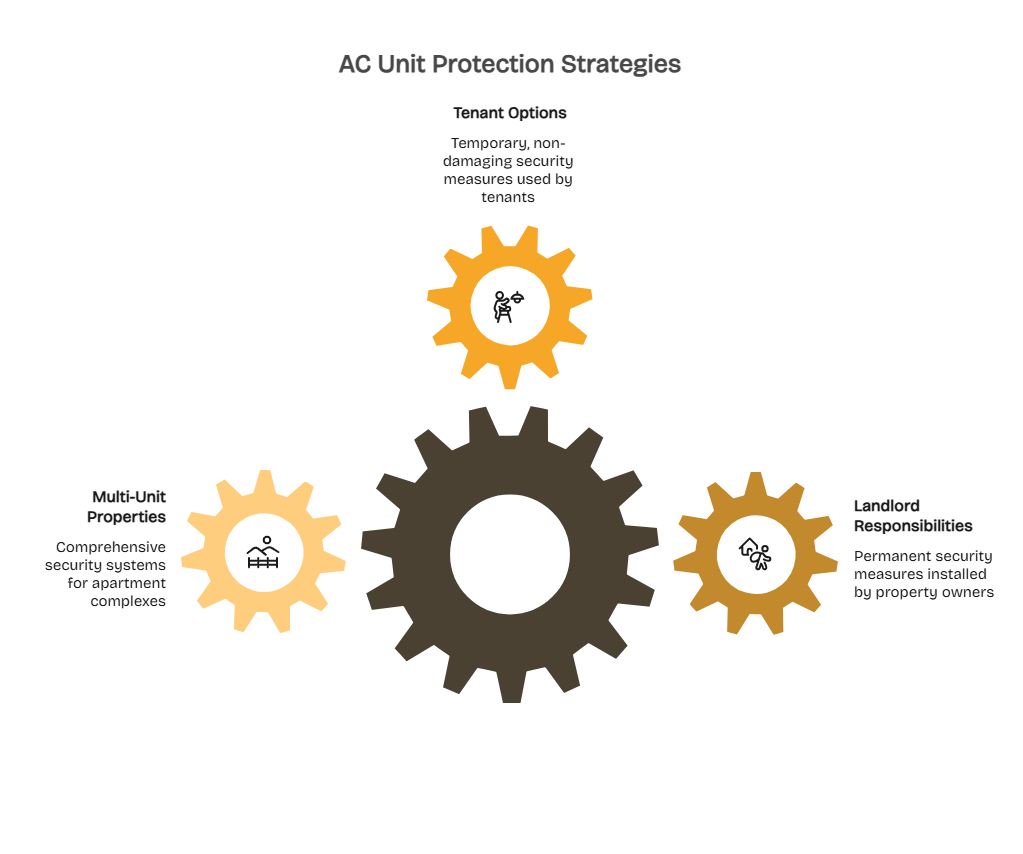
Protecting AC units in rentals requires clear responsibility, with landlords handling permanent security while tenants use temporary, non-damaging measures to reduce theft risk.
Landlord vs. Tenant Responsibilities
Property owners typically install and maintain HVAC, making theft prevention their financial interest.
Landlord Protections:
- Permanent cages attached to property
- Integrated alarm systems
- Outdoor lighting infrastructure
- Insurance coverage
Tenant Options:
- Battery-powered motion lights (removable)
- Wireless cameras with no drilling
- Request landlords install permanent security
Multi-Unit Properties
Complexes should implement:
- Perimeter fencing with controlled access
- Central camera systems monitoring all units
- Security patrols during high-risk hours
- Well-lit parking and equipment areas
Protecting Your AC Investment
AC unit theft is fast, costly, and increasingly common, but it is also highly preventable. Security cages form the foundation, while alarms, cameras, lighting, and layered defenses push protection past 95%. Preventing one theft saves thousands and avoids insurance headaches. Secure your HVAC system with Batten’s proven outdoor security solutions.
Protect your HVAC investment with Batten’s outdoor cameras and alarm systems designed to defend against copper theft and property crime.
Frequently Asked Questions
How Long Does AC Theft Take?
Thieves steal units in 20 seconds to 3 minutes. Security cages add 15-30 minutes, providing detection time.
Do Cages Affect Efficiency?
No, if properly installed maintaining 12-24 inch clearances. Closer positioning restricts airflow causing overheating and warranty voids.
Will Insurance Cover Theft?
Yes, under dwelling coverage. Deductibles apply and filing increases premiums 20-40% for 3-5 years.
What Should I Do If Catching Thieves?
Never confront – call 911 from safe location. Provide descriptions, vehicle info, direction of travel.
How Much Copper Is in Units?
Units contain copper worth $70-$100 at scrap yards. A drum sells for $1,000.
Are Motion Sensors Better Than Cameras?
Motion-activated saves storage. Continuous recording provides complete coverage. For high-risk properties, use continuous.
Can Smart Homes Prevent Theft?
Yes. Smart systems trigger multiple responses: lights, alarms, notifications, recording. SimpliSafe integrates with voice assistants.
Which Lock Type Works Best?
Puck locks (disc locks) with shrouded shackles resist bolt cutters. Master Lock 6270 recommended.
Do Landscaping Barriers Work?
Yes, combined with other methods. Thorny plants 24-36 inches from units deter approach while maintaining airflow.
What’s Most Cost-Effective?
Basic cage ($300) plus motion lights ($80) provide immediate 85%+ protection for $380 investment.
Sources
- Avoiding HVAC Unit Theft. 2026. EMC Insurance Companies. https://www.emcinsurance.com/losscontrol/techsheet/avoiding-hvac-unit-theft
- How To Protect Your Air Conditioner From Theft. 2020. Elite Plumbing, Heating & Air Conditioning. https://www.eliteheatingandacrepair.com/how-protect-air-conditioner-from-theft/
- Thieves Steal Air Conditioners as Heatwave Continues Across the US. 2024. Inside Edition. https://www.insideedition.com/thieves-steal-air-conditioners-amid-heatwave-across-the-us-88093
SEO Title: AC Unit Security Cage: Stop Copper Theft | Protection Guide
Meta Description: Security cages deter 85% of AC theft attempts. Learn how to protect your HVAC unit with cages, alarms, cameras and smart prevention strategies.
URL Slug: ac-unit-security-cage-protection-guide