
Quick Answer: The best way to keep cash and precious metals safe at home is a bolted-down, fireproof, waterproof safe combined with layered security-cameras, door alarms, and decentralized storage across 2-3 locations.
Power outages, banking disruptions, and natural disasters create real scenarios where accessible cash matters. But the same preparedness instinct that leads families to store cash and gold at home also leads many of them straight to the worst possible place: under the mattress.
Burglars know exactly where to look. Roughly 75% of burglars head straight to the master bedroom first-searching drawers, closets, and under the mattress. Per SafeHome.org’s review of FBI 2024 crime data, the average burglar spends only 10-12 minutes inside a home. Cash and small valuables vanish within that window.
And fire is just as dangerous as theft. Paper currency ignites at approximately 451°F. A house fire can reach 1,100°F within minutes. Cash stored without a rated fireproof container is simply gone.
The good news: protecting your physical assets doesn’t require a bank vault or a bunker. It requires smart, layered security built around realistic threats-the kind that also matters during the same emergencies that make home cash critical in the first place. See our extended blackout survival guide for how financial preparedness fits into a broader outage plan.
Table of Contents
- Key Takeaways
- Why Gold and Silver Belong in Your Emergency Plan
- The Real Risks: Theft, Fire, and Accidental Loss
- The Best Ways to Keep Cash and Precious Metals Safe at Home: Top Strategies
- Safe Placement and Installation Best Practices
- Storage and Condition Reference Tables
- Building Your Layered Valuables Security Plan
- Keeping Cash and Precious Metals Safe: Final Thoughts
- Frequently Asked Questions
- Sources
Key Takeaways
- A bolted-down, UL-rated fireproof safe is the single most important investment for protecting cash and precious metals at home.
- Standard homeowners insurance covers only about $200 in stolen cash – everything above that is your personal loss without a special rider.
- Gold surged an estimated 41% in 2025 to above $4,300 per ounce, its strongest annual gain since the late 1970s – making secure home storage more critical than ever for families holding physical metals.
- According to a Marist College poll, the top places Americans hide cash-freezer (27%), sock drawers (19%), under the mattress (11%)-are also the first three spots experienced burglars check.
- Browse Batten’s home security and emergency gear collection for safes, cameras, door alarms, and deterrent systems tested for real-world disaster scenarios.
Why Gold and Silver Belong in Your Emergency Plan
Gold and silver aren’t just for investors. For families who think seriously about preparedness, physical precious metals serve as a financial backup when digital systems go down-ATMs are offline, card processors fail, or regional banking infrastructure is disrupted.
According to the World Bank’s October 2025 Commodity Markets Outlook, gold surged an estimated 41% in 2025 alone, briefly exceeding $4,300 per ounce-its strongest annual gain since the late 1970s.
J.P. Morgan analysts project prices pushing toward $5,000 per ounce by late 2026, driven by central bank buying, geopolitical uncertainty, and institutional investor demand. Silver hit approximately $54 per ounce in October 2025, up roughly 80% on the year.
That kind of value density matters in a crisis. A single one-ounce gold coin fits in a shirt pocket and carries thousands of dollars in purchasing power-impossible to replicate with paper bills of equivalent worth. For emergency preparedness specifically, gold and silver offer:
- Inflation Resistance: Purchasing power holds when the dollar loses value
- System Independence: No reliance on bank networks, card processors, or the power grid
- Portability: High value-to-weight ratio makes it ideal for bug-out bags
- Liquidity: Coin shops, pawn shops, and private buyers accept gold even in disrupted economies
- Durability: Unlike paper cash, gold doesn’t burn, rot, or degrade over time
At current prices, even a modest allocation of two or three one-ounce coins represents significant household value-enough to justify the same serious security you’d apply to any other high-value asset in your home.
The Real Risks: Theft, Fire, and Accidental Loss
A 2012 Marist College survey of 1,080 Americans found that 27% hide cash in the freezer, 19% in a sock drawer, and 11% under the mattress. These are also the first three places an experienced burglar checks. The master bedroom sweep alone takes under two minutes for someone who has done it before.
Consider the full picture of risks:
- Theft: According to SafeWise’s FBI data analysis, cash and bank notes make up the highest-value category of stolen property – and only about 10% of stolen cash is ever recovered. FBI 2024 data shows 779,542 U.S. burglaries, with residential properties accounting for nearly two-thirds of all incidents.
- Fire: Cash stored under a mattress, in a freezer bag, or inside a hollowed book has zero fire protection. A house fire typically exceeds temperatures at which paper ignites within the first few minutes of burning.
- Flood: Basements, under-bed locations, and lower closet shelves are all flood-vulnerable. A burst pipe, not just a major storm, can destroy an unprotected cash stash in minutes.
- Accidental Loss: There are well-documented cases of people losing life savings after throwing out old furniture, donating belongings, or-in a now-famous case-discarding a mattress containing approximately $1 million in savings.
The Insurance Gap Most Families Don’t Know About
According to KeyBank’s emergency financial guidance, standard homeowners insurance policies typically cover only $200 in lost or stolen cash. MoneyGeek’s analysis of burglary insurance impacts confirms that cash theft coverage is among the most limited categories in standard policies-everything above that threshold is an uninsured personal loss unless you’ve added a scheduled rider.
Precious metals face a similar gap. Standard policies often cap jewelry and precious metal coverage at $1,000-$2,500-a fraction of what even a modest coin collection is worth at current gold prices.
The Best Ways to Keep Cash and Precious Metals Safe at Home: Top Strategies
Here’s the right way to store cash and gold safely at home.
1. Start with a Quality Fireproof Safe
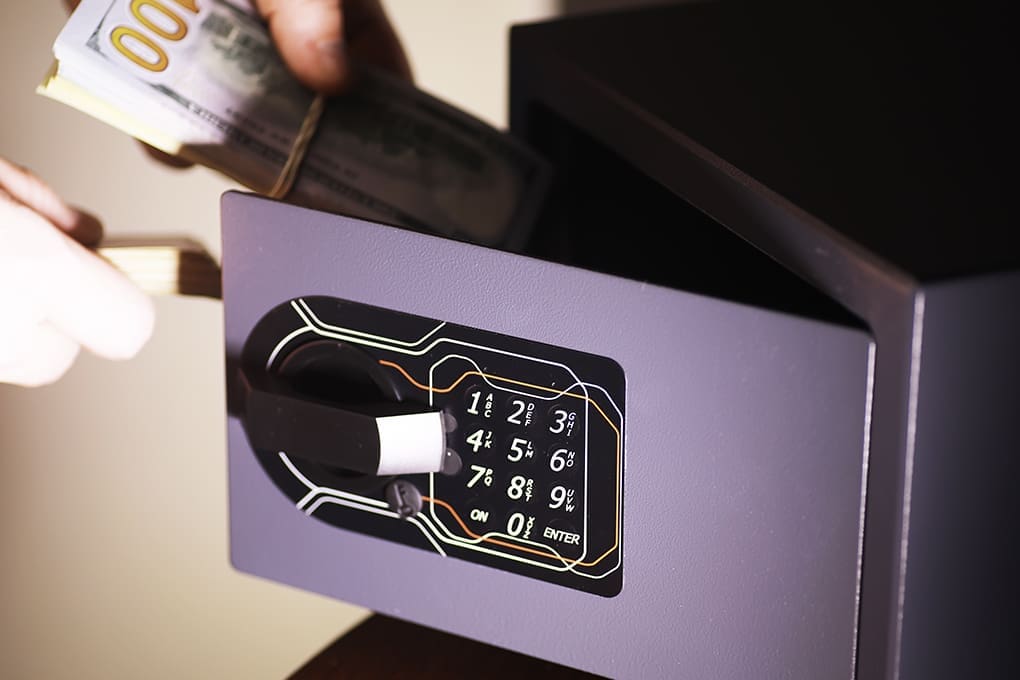
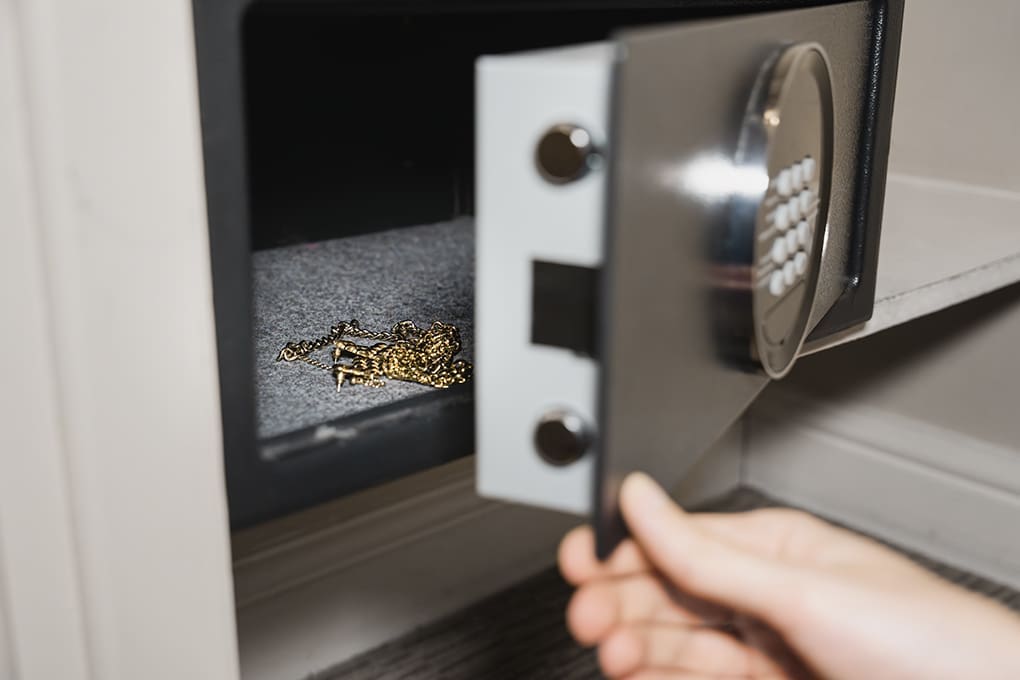
A fireproof, waterproof, bolt-down safe is the non-negotiable foundation. When evaluating options, look for:
- Fire Rating: Minimum 1-hour UL rating at 1,200°F; 2-hour for larger precious metals holdings
- Water Resistance: UL-rated water resistance to survive flooding and firefighting runoff
- Bolt-Down Capability: Pre-drilled anchor holes to secure to concrete or floor joists-an unbolted safe can be carried out and cracked offsite
- Lock Type: Digital or biometric for speed; combination backup for reliability
- Size: Large enough for documents, cash, metals, and a USB drive with digital document backups
The SentrySafe Digital Home Safe combines digital access with fire and water protection in a package that doesn’t require contractor installation. Mount it in a closet, under a desk, or inside a cabinet rather than leaving it exposed in a bedroom.

2. Distribute Storage Across Multiple Locations
No single location is failproof. Emergency preparedness professionals recommend distributing assets in layers:
- Primary Safe: Bulk of cash, all precious metals, important documents, digital backups
- Secondary Location: A small, accessible emergency cash amount ($200-$500) in a separate concealed location for situations when you need money quickly without opening the main safe
- Go-Bag Reserve: $100-$300 in mixed denominations, plus one or two small silver coins, inside your 72-hour emergency kit – ready to grab in under two minutes
For precious metals specifically, keep coins in their original mint packaging or hard capsules inside the main safe, and store silver in anti-tarnish bags to prevent oxidation. Keep a small portion separately for quick access if needed during an evacuation.
3. Keep Emergency Cash Separate from Precious Metals
Bankrate’s analysis of emergency cash recommendations from multiple financial planners suggests $500-$2,000 for most households-enough to cover food, fuel, and basics for 3-7 days if ATMs go offline. The monthly average cost for food and gasoline alone is approximately $1,000 per household, making this a reasonable baseline.
Keep your precious metals and larger cash reserves completely separate from daily-access funds. The safe stays locked; only the small secondary stash needs to be quickly accessible without the combination.
4. Use Decoy Tactics Strategically
A small decoy wallet or envelope with modest cash ($20-$40) in an obvious location-like a sock drawer or nightstand-can redirect a burglar’s attention away from your primary safe. This is a standard tactic recommended by security professionals: give a thief something to find quickly, increasing the odds they leave before locating what actually matters.
The decoy should look realistic. An empty or obviously fake setup is more likely to trigger a more thorough search than one with a plausible but modest amount.
5. Deter Entry Before It Happens
The safest valuables are ones a burglar never gets close to. 83% of convicted burglars said they would avoid homes with visible security systems, and 60% would choose a different neighborhood entirely if they observed extensive security measures.
The SABRE 120dB Wedge Door Stop Security Alarm requires no installation and creates both a physical barrier and an attention-drawing alarm if a door is forced open. For outdoor deterrence, the Eufy Security Floodlight Camera E340 Wired combines motion-activated floodlights with dual-camera coverage-the combination of light and visible cameras being among the most effective deterrents available.

For real-time threat response, the Deep Sentinel AI Security System adds live human monitoring alongside AI detection, addressing a key gap in traditional alarm systems: many police departments now require verified alerts before responding, making live-monitored systems significantly more effective in practice. Homes without security systems are 300% more likely to be broken into.
For more on combining security and emergency preparedness, see our guide on long-term power outage preparation both of which cover home security during grid-down scenarios.
Safe Placement and Installation Best Practices
Where you install your safe matters as much as which safe you choose.
- Avoid the Master Bedroom: It’s searched first in 75% of burglaries. Install in a home office, laundry room, utility closet, or secondary bedroom instead
- Always Bolt to Floor or Wall: Use lag bolts into floor joists or concrete anchors. Never leave a safe free-standing on carpet or tile
- Conceal When Possible: A heavy bookshelf positioned in front, a painting over a wall safe, or an appliance blocking access all add critical delay time
- Consider a Separate Decoy Safe: A visible but inexpensive safe in the bedroom can redirect attention while your real safe sits elsewhere

Storage and Condition Reference Tables
| Item | Best Storage Method | What to Avoid |
| Paper Cash | Sealed waterproof bag inside fireproof safe | Loose in drawers, under mattress, in freezer |
| Gold Coins and Bars | Original mint packaging or hard capsules in safe | Stacking loosely; contact with other metals |
| Silver Coins and Bars | Anti-tarnish bags or capsules; low humidity environment | Humid areas; bare skin contact during long-term storage |
| Important Documents | Fireproof document bag or pouch inside safe | Standard filing cabinet; loose papers |
Recommended Home Cash Reserves by Household Type
| Household Profile | Recommended Cash Reserve | Rationale |
| Single person or couple | $500-$1,000 | Covers 3-5 days of food and fuel |
| Family with children | $1,000-$2,000 | Larger daily needs; higher emergency spending |
| Rural or disaster-prone area | $2,000-$3,000 | Longer likely ATM and bank access outages |
| Precious metals holders | Separate cash from metals entirely | Different access needs; don’t co-mingle stashes |
Most financial planners recommend keeping no more than 10% of your total emergency fund in home cash. The remainder belongs in FDIC-insured accounts, which protect up to $250,000 per depositor. Replace home cash every 1-2 years to avoid bill degradation, and keep a mix of denominations-small bills are critical in emergencies when change isn’t available.

Building Your Layered Valuables Security Plan
This doesn’t need to happen all at once. Here’s a practical sequence:
- This Week: Honestly audit where your current cash and valuables are stored. If the answer involves a mattress, drawer, or freezer, that changes first.
- This Month: Purchase and install a bolted-down fireproof safe. Relocate all unprotected assets.
- This Quarter: Add exterior camera coverage, a door stop alarm, and a modest decoy wallet in an obvious spot.
- Ongoing: Review cash reserves twice a year; rotate bills; confirm precious metals storage materials haven’t degraded.
Emergency preparedness is about having what you need when systems fail. Cash and gold are part of that plan-but only if they survive the threats that could take them from you first. For a complete household preparedness picture, see our home security risk assessment, our blackout food safety guide, and our family disaster plan supplies guide.
Keeping Cash and Precious Metals Safe: Final Thoughts
Storing cash and precious metals at home only works if you treat them like the high-value assets they are. A mattress, drawer, or freezer isn’t security, it’s a shortcut to loss.
The right setup is simple: a bolted-down fireproof safe, smart distribution across locations, and visible deterrents that stop problems before they start. Layer that with a small, accessible emergency stash, and you’re covered for both everyday risks and real disruptions.
Preparedness isn’t about having cash on hand. It’s about making sure it’s still there when you actually need it.
Ready to protect your cash, gold, and family from real threats? Browse Batten’s home security and emergency gear collection for safes, cameras, door alarms, and deterrent systems tested for real-world disaster scenarios.
Frequently Asked Questions
How Much Cash Should You Keep at Home for Emergencies?
Most financial planners recommend $500-$2,000 for the average household-enough to cover food, fuel, and daily basics for 3-7 days if ATMs and card processors go offline. Families in rural or disaster-prone areas should lean toward the higher end. Keep no more than 10% of your total emergency fund in home cash; FDIC-insured accounts protect the rest up to $250,000.
Is Keeping Cash Under a Mattress Actually Safe?
No. Roughly 75% of burglars search the master bedroom first, and the mattress is one of their standard checkpoints. Beyond theft, cash under a mattress has zero fire or flood protection. House fires can reach temperatures that ignite paper within minutes. A fireproof, bolted-down safe in a non-bedroom location is the only reliable protection for meaningful cash amounts.
What Is the Safest Way to Store Gold and Silver at Home?
Keep gold and silver in a UL-rated, fireproof, bolted-down safe. Store coins in original mint packaging or hard capsules to prevent scratching. Use anti-tarnish bags for silver to prevent oxidation. Avoid humid locations like basements. Keep a small portion in your bug-out kit for evacuation scenarios. Distribute across 2-3 secure locations for added redundancy.
Does Homeowners Insurance Cover Stolen Cash and Precious Metals?
Standard homeowners insurance typically covers only $200 in stolen cash. Gold and silver have their own sub-limits, often $1,000-$2,500. To fully protect higher-value holdings, you need a scheduled personal property rider or a separate valuable items floater policy. Without one, losses above the sub-limit are entirely uninsured.
How Do I Choose Between a Wall Safe, Floor Safe, or Freestanding Safe?
Floor safes bolted into concrete are hardest to remove and offer the most protection. Wall safes are easily concealed behind artwork or shelving but offer less fire protection than floor or freestanding models. Freestanding safes are the most flexible but must always be bolted down-an unsecured safe can be carried out and cracked elsewhere. Prioritize fire rating first, bolt-down capability second.
Where Should I Hide a Home Safe to Avoid Burglars?
Avoid the master bedroom entirely-it’s the first room searched. Better locations include a home office closet, laundry room, secondary bedroom, or garage workshop. Concealing it behind furniture or inside a cabinet adds meaningful delay time. Always bolt it to floor joists or concrete anchors, not just drywall or a floating floor.
Sources
- “42 Home Burglary Statistics,” 2026, Reolink, https://reolink.com/blog/home-burglary-crime-statistics/
- “The Latest Burglary Statistics,” 2025, SafeHome.org, https://www.safehome.org/resources/burglary-statistics/
- “10 Surprising Home Burglary Facts and Stats,” 2025, SafeWise, https://www.safewise.com/home-security-systems/faq/burglary-stats/
- “Home Burglary Statistics: 11 Stats Every Homeowner Should Know,” 2025, Deep Sentinel, https://www.deepsentinel.com/blogs/home-security/home-burglary-statistics/
- “US Home Burglary: Statistics, Facts and Trends,” 2025, MoneyGeek, https://www.moneygeek.com/resources/home-burglary-statistics/
- “How Much Cash Should You Keep at Home,” 2025, Bankrate, https://www.bankrate.com/banking/how-much-cash-should-you-keep-at-home/
- “How Much Crisis Cash Should You Keep on Standby,” KeyBank, https://www.key.com/personal/financial-wellness/articles/how-much-cash-for-emergencies.html
- “When Uncertainty Rises, Gold Rallies,” November 2025, World Bank, https://blogs.worldbank.org/en/opendata/when-uncertainty-rises–gold-rallies
- “Gold Price Predictions,” 2025, J.P. Morgan Global Research, https://www.jpmorgan.com/insights/global-research/commodities/gold-prices
- “Forget the Mattress! More than One in Four Americans ‘Freeze’ Their Assets,” April 2012, Marist College Institute for Public Opinion, http://maristpoll.marist.edu/wp-content/misc/usapolls/US120320/Hide%20Money/Complete%20Friday,%20April%2013,%202012%20USA%20Marist%20Poll%20Release%20and%20Tables.pdf