
Quick Answer: No. A standard grid-tied solar system shuts down within two seconds of losing utility power, even in bright sun, because safety certification requires the inverter to switch off rather than backfeed lines that crews believe are dead. Only three things restore power: a battery paired with a hybrid inverter and transfer switch, a portable power station, or a generator. Batten Home Security helps homeowners pick between those without defaulting to the priciest option – and if you already own solar with no battery, a solar-capable power station is the fastest fix.
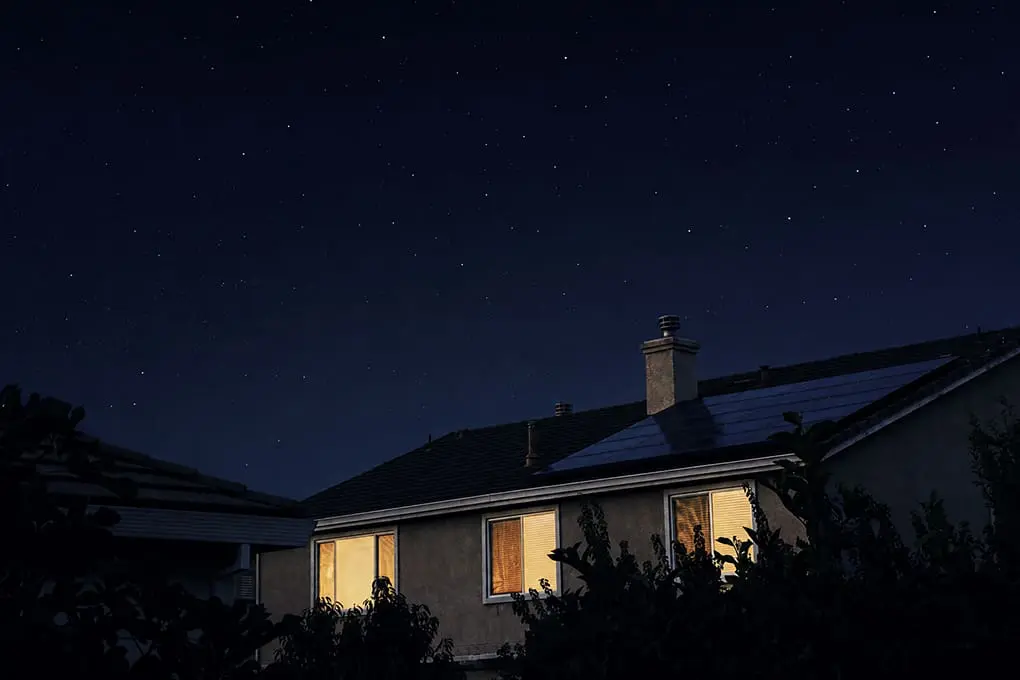
There is a particular kind of frustration in standing in a dark kitchen on a bright afternoon, looking out at a roof covered in panels you paid five figures for, and having nothing to plug your phone into. Most people discover this the hard way, during their first real outage, and their first assumption is that something broke. Nothing broke. The system is doing precisely what it was certified to do.
The gap here is a sales-conversation gap more than a technology gap. Solar gets marketed on monthly savings, and backup power is a separate product with a separate price tag, so the distinction often does not get spelled out clearly until an outage does it for you. That matters more every year: U.S. electricity customers averaged 11 hours of power interruptions in 2024, nearly double the annual average of the previous decade, with Hurricanes Beryl, Helene, and Milton accounting for 80% of those lost hours. South Carolina customers averaged close to 53 hours without power that year. For comparison, the same measure sat at about five and a half hours in 2022, which is how quickly the baseline can move.
Many of the homeowners we work with come to this question already owning solar, already annoyed, and wanting a straight answer about what it would take to fix it. That is what the rest of this covers.
Table of Contents
- Key Takeaways
- Do Solar Panels Work During a Power Outage? What Happens the Moment the Grid Drops
- Can Solar Panels Power a House During an Outage? Comparing Your Four Real Options
- Solar Panels With Battery Backup During Outage: How Intentional Islanding Works
- How Long Can Solar Batteries Power a House? Running the Actual Numbers
- Backup Power Options for Solar Homes Without a Battery
- How to Use Solar Panels During a Blackout: Preparation That Pays Off Before the Lights Go Out
- Conclusion: Panels Generate, Batteries Deliver
- Frequently Asked Questions About Solar Panels During a Power Outage
- Sources
Key Takeaways
- Grid-Tied Solar Goes Dark By Design: Certification standards require the inverter to stop energizing within two seconds of losing the grid, so sunshine alone does not equal backup power.
- Anti-Islanding Protects Line Workers, Not Your Equipment: The shutdown exists so your roof cannot backfeed a de-energized neighborhood circuit while crews are working on it.
- A Battery Is What Changes The Answer: Solar plus a battery, a hybrid inverter, and an automatic transfer switch can legally form a small island and run your home while staying disconnected from the grid.
- Runtime Depends On Load, Not Panel Count: A typical home battery covers a refrigerator, lights, internet, and phone charging for a day or more, but whole-home air conditioning drains it in hours.
- Portable Power Is The Fastest Fix For Existing Solar Owners: A solar-capable power station needs no electrician and no permit, and Batten’s backup power and energy solutions cover the range from phone-scale to multi-day fridge-scale.
Do Solar Panels Work During a Power Outage? What Happens the Moment the Grid Drops
The sequence is faster than most people realize. Your inverter continuously monitors grid voltage, frequency, and phase. When the utility supply disappears, the inverter detects the loss and opens its connection, ceasing power output. The deadline is specific: NREL’s technical guidance on the interconnection standard states that a system forming an unintentional island must detect it and go offline within two seconds.
The underlying clause, which state interconnection documents quote directly, requires the equipment to detect the island, cease to energize, and trip within 2 seconds of its formation. The panels keep generating DC voltage in the sun, but with the inverter offline there is nothing converting it to usable household AC, and no path to your outlets.
This applies to string inverters and microinverters alike. Enphase, whose microinverters sit under individual panels, states plainly that with a traditional grid-tied system the array stops producing during an outage even if the sun is still shining, as required by UL 1741 and IEEE 1547. There is no hidden switch, no installer override, no setting buried in an app. A compliant inverter without battery hardware cannot run your house, and any product claiming otherwise would not be legal to interconnect.
Why Solar Panels Shut Off During an Outage: Anti-Islanding, Explained Plainly
An “island” is a pocket of live electricity sitting on a grid segment that is supposed to be dead. Picture a lineman working on a distribution line after a storm, having confirmed the circuit is isolated and de-energized, while one house on the block quietly pushes 240 volts back through its meter. That is the scenario anti-islanding prevents, and it is why the requirement is non-negotiable rather than a manufacturer preference.
There is a second reason that gets less attention. When the utility restores service, an unsynchronized island can collide with returning grid power, producing a surge capable of damaging your inverter, your appliances, and the utility’s transformer. The shutdown protects your own equipment as much as anyone else’s safety. In practice the hardware clears the bar comfortably: laboratory testing of multiple inverters found that run-on times stayed within the two-second requirement in every case tested, even with grid-support and ride-through functions enabled.

Solar Inverter Shutdown During Power Outage Is Not a Malfunction
Worth saying directly, because we get asked: if your monitoring app shows zero production during an outage, do not call for warranty service and do not start opening equipment. Most inverters also refuse to restart the instant the grid returns. They wait through a reconnection window, watching for stable voltage and frequency before resuming, which commonly runs about five minutes. If your neighbors have power and your production is still flat, give it a few minutes before assuming a fault.
Can Solar Panels Power a House During an Outage? Comparing Your Four Real Options
The honest answer depends entirely on which of four configurations you own, and most residential solar in the U.S. is the first one. This is the single most useful table in this article, because it tells you where you currently stand before you spend anything.
| System Type | Powers Home in Outage? | Works at Night? | Needs Electrician/Permit? | Typical Cost Range |
| Grid-tied solar, no battery | No | No | Already installed | – |
| Grid-tied solar + home battery | Yes, critical loads | Yes | Yes | $10,000–$20,000+ installed |
| Off-grid or hybrid system | Yes | Yes, if sized correctly | Yes | $25,000+ |
| Portable power station + solar panel | Yes, plug-in loads only | Yes, from stored charge | No | $200–$2,500 |
Two things stand out when clients see this laid out. First, the jump from “no backup” to “battery backup” is a substantial capital project involving permits, inspection, and often a utility interconnection amendment. Second, the portable column solves a meaningful slice of the problem for a fraction of the money and can be ordered today. Neither observation makes batteries a bad buy; they make the decision an honest trade-off rather than an upsell.

Solar Panels With Battery Backup During Outage: How Intentional Islanding Works
The distinction that matters is between unintentional islanding, which standards forbid, and intentional islanding, which standards accommodate. A battery-backed system uses an automatic transfer switch to physically disconnect your home from the utility at the service entrance.
Once that separation is confirmed, the hybrid inverter is free to establish its own voltage and frequency reference and run your circuits as a self-contained microgrid. No electricity leaves the property, so line workers stay safe and the system stays compliant.
The transfer switch is the part people underestimate. Without it there is no verified separation from the grid, and without verified separation the inverter will not form an island no matter how full the battery is. A battery alone, bolted to a wall next to a conventional grid-tied inverter, does not deliver outage backup. The switch, the hybrid or backup-capable inverter, and the battery function as one system.
Do You Need a Solar Battery for Power Outages?
For genuine whole-house continuity through a multi-day outage, yes, or a generator. For keeping a refrigerator cold, a phone charged, a router alive, and a CPAP running, no – a portable station handles that. Based on what we’ve seen, the deciding factors are outage duration in your area, whether anyone in the household depends on powered medical equipment, and whether you have well water, since losing a well pump means losing water entirely.

One nuance often missed: a handful of inverter models include a limited daytime-only backup outlet that produces modest power directly from the array without any battery. Availability varies by manufacturer and model, output is small, and it stops the moment a cloud passes. Check your specific inverter’s documentation before counting on it.
Solar Panels and Home Battery Backup: Why the Critical Loads Panel Matters
Most battery installations do not back up the entire house. The electrician moves selected circuits onto a separate subpanel – the critical loads panel – which is what the battery serves during an outage. This is a deliberate design choice, not a limitation: concentrating a finite battery on the circuits that matter stretches runtime dramatically compared to trying to hold up the whole service, including electric ranges and central air.
Choosing those circuits well is where households gain or lose a day of runtime. We typically recommend prioritizing:
- Refrigerator And Freezer: Protects hundreds of dollars of food and runs intermittently rather than constantly.
- Well Pump Or Sump Pump: Water supply and flood prevention both fail silently without power.
- Internet Router And Modem: Keeps security cameras, alarm communication, and remote work alive.
- A Few Lighting Circuits: LED lighting draws very little and transforms how a long outage feels.
- Medical Equipment Outlets: Non-negotiable if anyone depends on oxygen, dialysis, or a CPAP.
- Furnace Blower Or Fan: In cold climates a gas furnace still needs electricity to distribute heat.
Notably absent: electric water heater, clothes dryer, oven, and central air conditioning. Those loads will empty a residential battery faster than almost anything else, and leaving them off the critical panel is usually the right call.
How Long Can Solar Batteries Power a House? Running the Actual Numbers
Here is where expectations need calibrating with arithmetic rather than marketing. The average U.S. residential utility customer purchased 10,791 kilowatt-hours of electricity in 2022, roughly 899 kWh per month, and EIA’s most recent state-by-state billing data puts average monthly residential consumption at 863 kWh in 2024. Either figure works out to somewhere near 29 or 30 kWh per day. Common home batteries land in the 10–16 kWh range. Divide the second number by the first and a single battery covers well under a day of normal consumption.
That math is why critical-load design exists. Trimmed to essentials, the same household typically draws somewhere between 3 and 8 kWh per day, and the picture changes completely.
| Load Scenario | Approximate Daily Draw | 13 kWh Battery Runtime | With Daytime Solar Recharge |
| Fridge, LED lights, wifi, phones | 3–4 kWh | About 3 days | Effectively indefinite in clear weather |
| Above plus well pump and furnace blower | 6–8 kWh | 1.5–2 days | Multiple days |
| Above plus one window AC unit | 12–18 kWh | Under 1 day | 1–2 days |
| Whole home, normal use | ~30 kWh | 8–10 hours | About 1 day |
The rightmost column is the point of pairing a battery with panels rather than using a battery alone. During a daytime outage the array recharges the battery while also carrying live loads, so a well-sized system can cycle indefinitely as long as the sun cooperates. Several consecutive overcast winter days are the scenario that breaks this, which is worth planning for in northern climates and during the kind of prolonged winter events covered in our guidance for surviving an extended ice storm.
Backup Power Options for Solar Homes Without a Battery
If you already own grid-tied solar and cannot justify a retrofit, you are not stuck. This is the most common situation we see, and the practical answer is a portable power station, optionally paired with a folding solar panel so it can recharge itself when the outage outlasts its stored capacity.
The scale question matters more than the brand. A phone-and-radio problem and a keep-the-fridge-running problem call for very different equipment, and buying the wrong end of that range is the most frequent mistake.
At the small end, something like the Hiluckey solar charger covers personal electronics: a 25,000 mAh pack with four foldable panels, a USB-C port and two USB-A ports for charging three devices at once, and a built-in flashlight rated for up to 110 hours of continuous use. Set expectations correctly – this recharges a smartphone roughly six to eight times and a tablet about 2.5 times. It keeps you connected and lit. It will not run an appliance, and the integrated panels recharge slowly compared with a proper solar array, so treat solar input as a top-up rather than the primary charging method.
For appliance-level backup, the Jackery Solar Generator 1000 Plus sits in the range where a power station genuinely substitutes for a small battery bank: 1,264 Wh of capacity with 2,000 W of output, expandable to 5 kWh with up to three add-on battery packs, which Jackery rates at one to three days of home backup depending on load.
It uses LiFePO4 cells rated for 4,000 charge cycles, and it bundles with SolarSaga panels so it can be replenished from sunlight rather than needing a live wall outlet. A useful mental model: 1,264 Wh runs a modern efficient refrigerator for roughly a day, and paired panels can extend that meaningfully in clear weather. Stock on this model moves, so if it is showing unavailable, the Explorer 1500 v2 and the Bluetti AC180 occupy a similar capacity tier in the same power generation range.
Whichever direction you go, the browsing-time advice is the same one we give in our rundown of portable solar options for the home: match watt-hours to the loads you actually intend to run, check the continuous output rating against the startup surge of a refrigerator compressor, and buy the panel at the same time rather than after the storm. Batten’s full power generation and backup energy range is organized around those scale tiers, and if you are unsure which one fits, our advisor Hatches can talk through your setup and load list.
Solar Panels With Generator Backup: Real Capability, Real Hazards
Generators still make sense for long rural outages and heavy loads, and for many households the sensible answer is a generator for duration plus solar-charged storage for quiet overnight running. The hazards, though, are not theoretical, and this is the one section of this article where getting it wrong kills people.
Ahead of the 2026 hurricane season the Consumer Product Safety Commission reiterated its guidance, noting that portable generators are among the leading causes of post-storm carbon monoxide deaths and that CO can kill within minutes, often before symptoms register. The non-negotiables:
- Never Run A Generator Indoors: That includes garages, basements, crawlspaces, sheds, and porches, even with doors and windows open. Ventilation does not solve this.
- Twenty Feet Minimum: Operate outdoors only, at least 20 feet from the building, with exhaust pointed away from windows, doors, and vents.
- Never Backfeed Through An Outlet: Plugging a generator into a wall receptacle to energize house wiring endangers line workers and can start a fire. Use a properly installed transfer switch or run appliance cords directly.
- Buy A CO Shut-Off Model: Look for units certified to PGMA G300-2023 or UL 2201-2023, which add automatic shut-off when CO builds nearby; UL 2201 models also cut emissions.
- Test Your Alarms Before Storm Season: Working CO and smoke alarms on every level, outside sleeping areas and inside bedrooms.
That last point deserves emphasis, because backup power and CO detection are the same safety project. If you are not certain your alarms are current, our explainer on where smoke and carbon monoxide detectors are actually required covers placement and replacement intervals.
How to Use Solar Panels During a Blackout: Preparation That Pays Off Before the Lights Go Out
Almost everything useful here happens before the outage, not during it. Find your inverter’s documentation now and determine whether it has any battery-ready or daytime-backup capability, because that single fact decides whether a retrofit is a straightforward addition or a full equipment replacement. Locate your main disconnect and, if you have a battery, confirm you know which circuits are on the critical loads panel – homeowners are frequently surprised during an outage to learn the garage freezer is not one of them.
Charge portable stations to full at the start of hurricane or winter storm season and top them off quarterly, since lithium packs self-discharge in storage. Keep the folding panel with the station rather than in a different part of the basement. If you travel, remember that an outage while nobody is home is how freezers thaw and pipes freeze undetected, which is part of why our pre-vacation home preparation checklist treats power continuity as a security issue rather than a comfort one. For households in storm-exposed regions, working through a hurricane defense plan before the season starts is more productive than sorting equipment out during a warning.
Conclusion: Panels Generate, Batteries Deliver
The short version of a long topic: solar panels are a generation asset, not a resilience asset, and the two only become the same thing when you add storage and a transfer switch. A grid-tied array without a battery will go dark in an outage every single time, by design, and that behavior is a safety feature protecting the crews restoring your power. Understanding that ahead of time is the difference between an inconvenient evening and a frantic search for equipment while the shelves are empty.
Where households land varies sensibly. If outages in your area are brief and infrequent, a mid-size solar-capable power station covering the fridge, the router, and phone charging is proportionate and affordable. If you have well water, medical equipment, or a history of multi-day outages, a permitted battery system with a properly designed critical loads panel is worth the capital. Either way, decide on a calm day.
Ready to close the gap between the panels on your roof and the power in your outlets? Browse Batten’s expert-vetted backup power and energy solutions to match a power station to the loads you actually need to hold up – the collection is filterable by availability, so you can see what ships now. Not sure which tier fits your home? Ask Hatches, our security advisor, or work through the guides in our resource library first. No hype, no overselling – just the setup that matches your actual risk.
Frequently Asked Questions About Solar Panels During a Power Outage
Will Solar Panels Work if the Grid Goes Down Permanently?
A grid-tied system cannot operate without a grid reference, so a permanent grid failure would leave it inert until reconfigured with a hybrid inverter and battery. Converting grid-tied equipment to off-grid capability generally means replacing the inverter rather than adding to it. Households genuinely planning for extended infrastructure failure should read our guidance on backup systems for prolonged grid disruption.
Can Solar Panels Provide Emergency Power for Medical Equipment?
Only through a battery or a power station, never directly from a grid-tied array. Anyone dependent on powered medical equipment should size storage against the device’s documented watt-hour draw over a full 24 hours and keep a second charged unit in reserve. Also register with your utility’s medical baseline or priority restoration program, which many people do not know exists.
Does Off-Grid Solar Power During a Blackout Require Different Panels?
No – the panels are identical. The difference is entirely in the inverter, charge controller, battery, and switching hardware. This is good news for retrofits, because your existing array is generally reusable when adding storage.
How Much Does Adding Solar Battery Backup for Home Power Outages Cost?
Installed residential battery systems commonly run from roughly $10,000 to over $20,000 depending on capacity, inverter replacement needs, and electrical work, and pricing varies enough by region and incentive program that a quote is the only reliable number. Ask specifically whether the quote includes the transfer switch and critical loads subpanel, since those are sometimes listed separately.
Will a Solar Battery Backup Affect My Homeowners Insurance?
Storage equipment can affect coverage and replacement value, and some carriers offer credits for measures that reduce water and freeze damage during outages. It is worth a call to your agent before installation rather than after, similar to the conversation we describe in our overview of how security systems interact with homeowners insurance.
Do Solar Panels Work During a Blackout if I Live in an RV or Van?
Yes, and more simply than in a house, because mobile systems are off-grid by design with no utility to island from. That independence is one reason solar is standard in the setups discussed in our look at security and power needs for mobile living.
Can I Charge a Power Station From My Rooftop Solar During an Outage?
Not from the rooftop array, since that inverter is offline. You charge a power station from its own dedicated portable panels, from a wall outlet before the outage, or from a vehicle 12V socket. This is precisely why buying the folding panel alongside the station matters.
Sources
- “What happens when the power goes out in a grid-tied solar energy system? Anti-islanding protection,” n.d., Enphase Energy, https://support.enphase.com/s/article/What-happens-when-the-power-goes-out-in-a-grid-tied-solar-energy-system-Anti-Islanding-protection
- “Unintentional islanding of distributed energy resources: technical considerations,” 2022, National Renewable Energy Laboratory, https://docs.nrel.gov/docs/fy22osti/77782.pdf
- “Anti-islanding: IEEE 1547-2018 resources,” n.d., National Renewable Energy Laboratory, https://www.nrel.gov/grid/ieee-standard-1547/anti-islanding
- “Technical standards review group inverter source requirements document,” 2022, Commonwealth of Massachusetts, https://www.mass.gov/doc/tsrg-inverter-source-requirements-document/download
- “Hurricanes in 2024 led to the most hours without power in the United States in 10 years,” 2025, U.S. Energy Information Administration, https://www.eia.gov/todayinenergy/detail.php?id=66744
- “U.S. electricity customers averaged five and one-half hours of power interruptions in 2022,” 2024, U.S. Energy Information Administration, https://www.eia.gov/todayinenergy/detail.php?id=61303
- “How much electricity does an American home use?,” 2024, U.S. Energy Information Administration, https://www.eia.gov/tools/faqs/faq.php?id=97&t=3
- “2024 average monthly bill – residential (Table 5A),” 2025, U.S. Energy Information Administration, https://www.eia.gov/electricity/sales_revenue_price/pdf/table_5A.pdf
- “CPSC warns of generator, carbon monoxide and fire hazards ahead of hurricane season,” 2026, U.S. Consumer Product Safety Commission, https://www.cpsc.gov/Newsroom/News-Releases/2026/CPSC-Warns-of-Generator-Carbon-Monoxide-and-Fire-Hazards-Ahead-of-Hurricane-Season
- “Jackery Solar Generator 1000 Plus product specifications,” n.d., Batten, https://batten.shop/products/jackery-solar-generator-1000-plus
- “Hiluckey Solar Charger product specifications,” n.d., Batten, https://batten.shop/products/hiluckey-solar-charger-25000mah